
We Won't Grow Old Together
Nous ne vieillirons pas ensemble / a film by Maurice Pialat (1972)

The Windshield
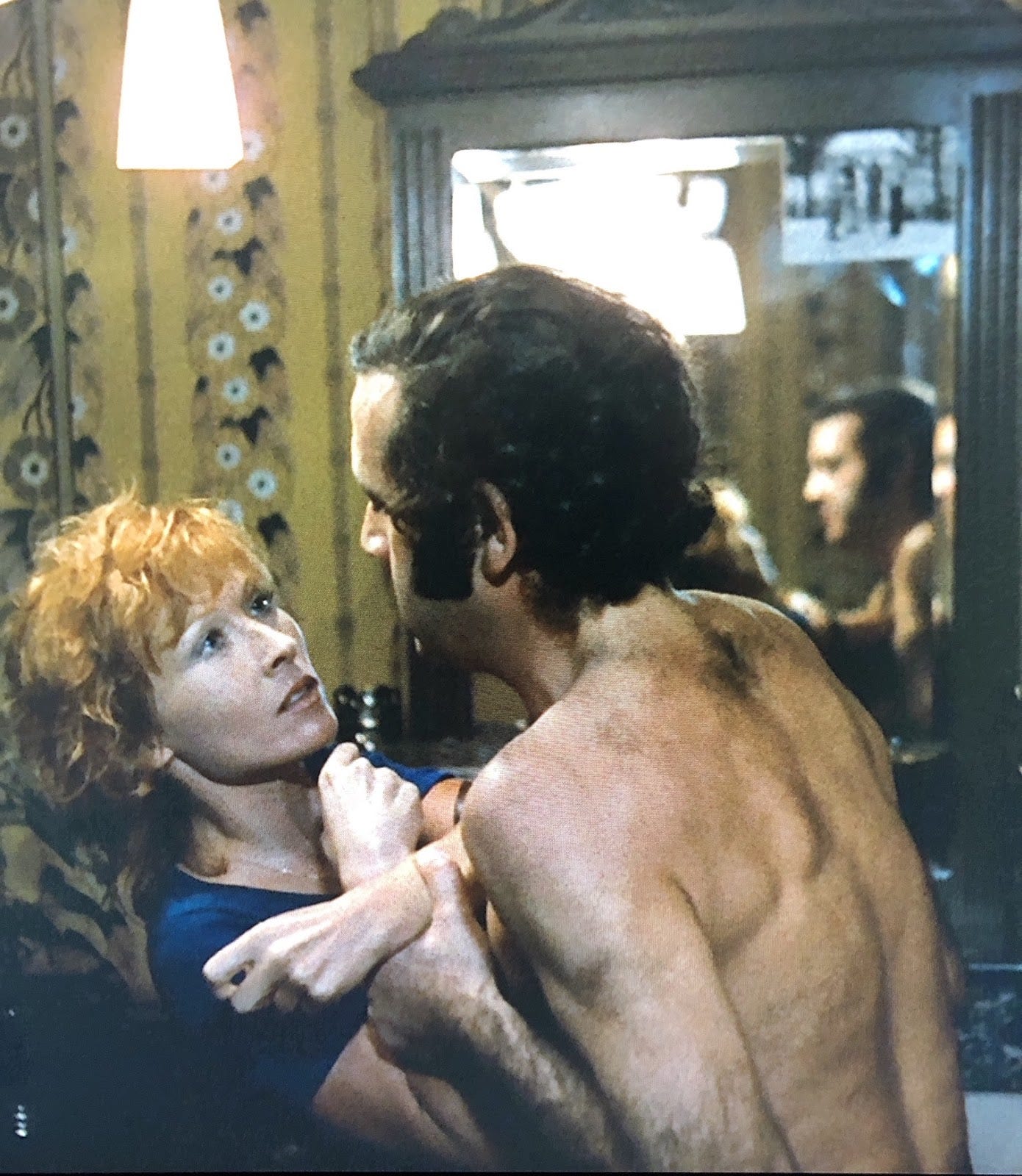
On the occasion of the Cinémathèque Française’s complete retrospective of the films of Maurice Pialat on his centenary, I reprint items here from the previous incarnation of Cinemasaparagus and the Masters of Cinema PAL DVD release of the film, which I produced and the booklet accompanying which I edited. In 2019, I wrote the following:
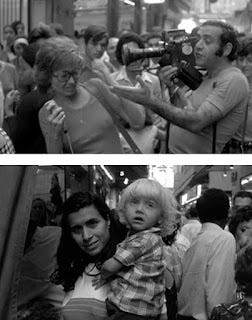
Nous ne vieillirons pas ensemble [We Won't Grow Old Together, Maurice Pialat, 1972] is a grand masterpiece, constructed out of the plane of the screen/camera itself, like the windshield of Jean's little blue car, an extension of (and crutch for) himself. The 180-degree rule made anew as Jean and Catherine vacillate endlessly, the set (the framing of the set) set-off from the camera by a line of demarcation, exemplified most directly in the cuts to the 16mm handheld shots from Jean's camera at the street bazaar.
Nightmares in Pialat's film that goes often unremarked: The French predilection for the seashore, body-exposing and loud; and the fact that couples of that epoch got married like they were taking out a short-term loan.
"There's a man who cries in Ordet, a film by Dreyer." "Why?" "His wife's dead." "Parting's like dying." "But [Catherine's] alive, that's even worse." •
===
In 2009 I commissioned Emmanuel Burdeau to write the main essay for the MoC booklet. A few days ago he re-posted it on his Substack in the original French. I present the full text here (I think he made a few emendations now in 2025), along with the English translation I carried out, in consultation with Emmanuel at the time.
Pialat n’est pas là
by Emmanuel Burdeau
Sur « Nous ne vieillirons pas ensemble », à l'occasion du centenaire de Maurice Pialat, né le 31 août 1925
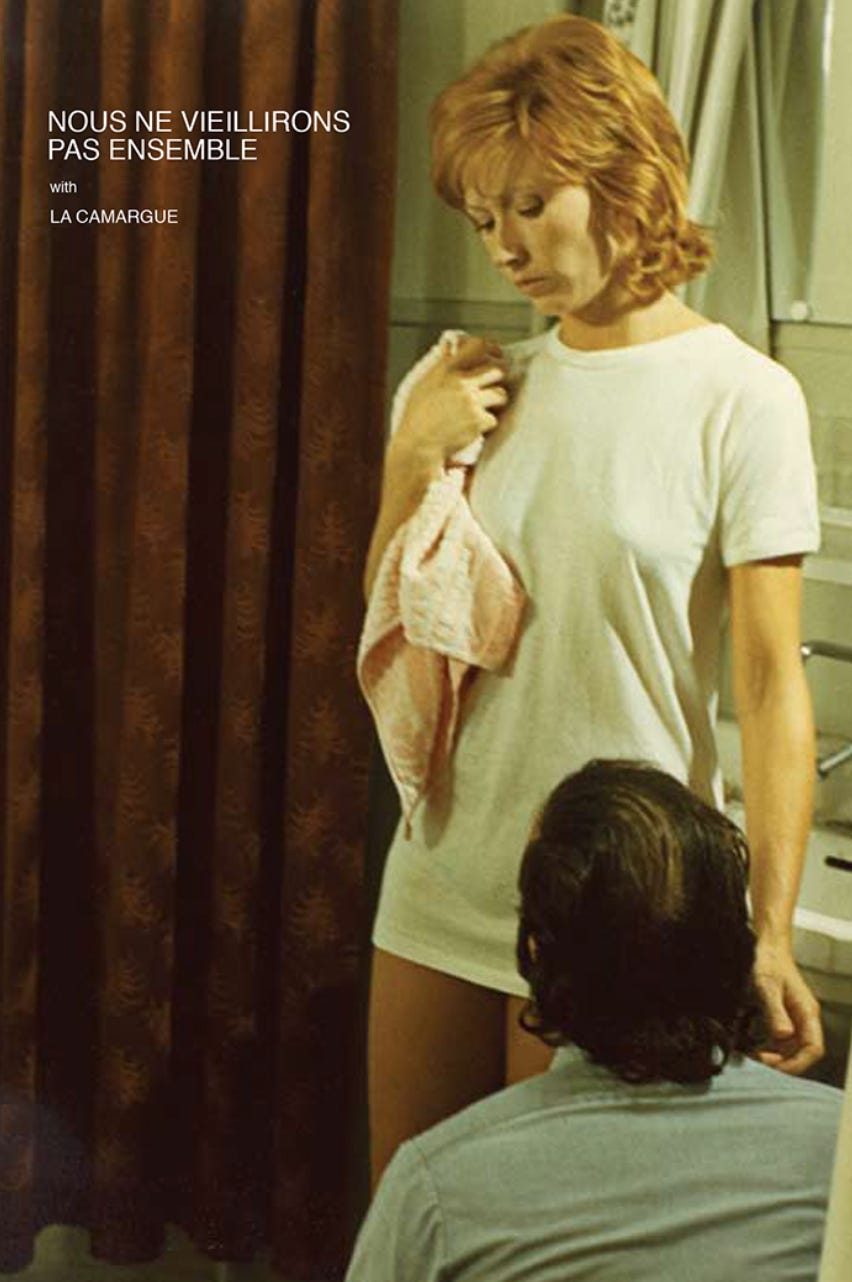
« Je m'en vais.
Je veux passer par Illiers, le pays de Proust, mais ma bagnole est tombée par panne et je suis rentré cahin-caha à Paris ».
C'est en fin de chapitre que Maurice Pialat consigne cette notation. A l’époque, Nous ne vieillirons pas ensemble n'est pas encore un film. C’est pour l’heure un roman, un bref et beau récit d'indifférence et de douleur. Du livre au film, l'histoire demeure : l'interminable fin d'une liaison de six ans entre une jeune secrétaire intérimaire et un cinéaste velléitaire de quinze ans son aîné. Colette devient Catherine, Jean reste Jean, c'est-à-dire Pialat lui-même, ce que la profession du personnage, son caractère râleur et l'emploi de la première personne indiquent avec plus de clarté encore sur le papier qu’en pellicule.
Après un bref séjour en compagnie des parents de la jeune femme, Jean s'en va, une fois de plus. Fâché, piteux, une fois de plus. Il monte dans sa R8, une fois de plus, et veut avant de regagner Paris passer par Illiers, le pays de Proust. La voiture tombe en panne, encore un trajet pour rien. Jean est décidément un raté. Il n'aura même pas réussi à rendre visite au grand écrivain.
Nous ne savons pas ce qu'il aurait retenu de ce pélérinage dont l'intention témoigne au moins qu'un esthète sommeille sous la brute. Nous pouvons en revanche difficilement résister à l'envie de mettre en regard deux formules à ce point différentes que l'une semble l’inverse de l'autre : A la recherche du temps perdu, Nous ne vieillirons pas ensemble.
C'est à Gilles Deleuze et à son Proust et les signes que nous devons d'avoir compris que le titre de Proust a en vérité deux sens. Le temps perdu puis retrouvé est celui de la mémoire dont seule l'écriture peut assurer la reconquête. Et il est ce temps que, dans sa jeunesse, l'écrivain passa à rien sinon à se distraire et dont il réalise in fine qu'il était nécessaire à son œuvre future, car sans cela il n'eût saisi aucun de ces signes – mondains, amoureux… – qui en sont le cœur. L'écriture les retrouve et les remunère tous deux, le temps perdu du passé en général et le temps perdu de l'oisiveté en particulier. Peut-on en dire autant de la formule de Pialat ? Est-il possible y reconnaître le jeu de deux significations et d’en déduire une définition de son esthétique ?
Poser ces questions, c'est déjà commencer de répondre à une autre en signalant une affinité entre l'écrivain et le cinéaste. Tous les deux ne font pas seulement œuvre d'autobiographie à la première personne, l'art leur est aussi un souci explicite. Nous le savons de Proust, mais nous le savons moins de Pialat. Nous avons oublié – si nous l’avons jamais su – qu’entre autres projets restés dans un tiroir, Pialat en eut un intitulé L’Enfance de Marcel Proust. « MP par MP » ? Il est permis d’y rêver.
De même nous avons tendance à négliger que Nous ne vieillirons pas ensemble a pour personnage principal un cinéaste, que Jean Yanne est montré à la caméra et Marlène Jobert au son, que Demy, Chabrol et Dreyer sont quelques uns des noms égrénés par le dialogue, ou que Jean ironise sur l’esprit critique acquis par la jeune femme auprès de lui, et dont elle semble à présent empoisonner son mari quand ils regardent un film à la télé. Sans doute cet aspect est-il surtout sensible dans le roman, où une place plus large est faite aux plaintes de Jean sur sa carrière qui ne démarre pas, ainsi qu'à l'évocation du milieu cinématographique parisien. Le cinéma reste néanmoins présent au cinéma, comme thème et comme motif.
Voici en effet un film qui ne méconnaît jamais qu'il est un film. Il est d'usage d'en souligner le caractère répétitif, les innombrables scènes de voiture entre Catherine et Jean, l’alternance des brouilles et des réconciliations. Il n'est pas sûr en revanche qu'on ait assez noté combien cette structure emprunte à la représentation. Catherine et Jean vont et viennent : tout un drame d'« entrées » et de « sorties », au sens scénographique et psychologique. Assis côte à côte dans la R8 au point mort, ils pourraient aussi bien être en train de répéter leur prochaine scène, qu'ils iront jouer dans un décor plus approprié à la passion que cette vieille caisse… La construction de chaque scène est certes minimale – elle et lui en train de discuter, le plus souvent –, mais Pialat a assez de ressources pour éviter le champ contre-champ et trouver un peu partout quelque équivalent de rampe ou de tréteaux : balcon, barrière, rambarde, parapet, fenêtre… Sous des apparences d'ascèse, la richesse des théâtres de fortune rivalise avec celle du « vieux maître » de Pialat, Jean Renoir.
On voit à quelle vulgate on aimerait ici tordre le cou : le portrait et l'éloge de Pialat comme cinéaste de la transparence et de l'immédiateté réalistes, auteur de films dont la puissance serait, miraculeusement, d’être « comme la vie ». Rien de plus faux ni de plus pernicieux. Récuser ces âneries suffirait à motiver l’inattendu d’une comparaison avec Proust. Comme l'écrivain, Pialat a l'obsession de l'art – faut-il rappeler qu'il fut peintre avant de devenir cinéaste ? Comme lui il recrée, il refait.
Il est pourtant bien vrai que tout oppose leurs formules. Passé contre futur, affirmation du passé contre négation du futur. Elan contre impasse, élan de la retrouvaille contre impasse de la rupture. Au temps perdu de l'oisiveté chez Proust répond chez Pialat une distraction d'un autre genre : une certaine manière de s'enfoncer dans le présent jusqu’à l’aveuglement. C'est le premier sens de la formule, Nous ne vieillirons pas ensemble : le présent est négation du futur, répétition et effacement, fabrication d’oubli. Les caresses et les baffes se succèdent, entre Catherine et Jean : il semblerait que tout soit toujours sur le point de sombrer ou de renaître. Les plus belles paroles qu'ils échangent sont pour se confier, dans un soupir, quelques instants après une dispute qu'on aurait cru irréparable : « c'est comme avant ». Ils montent en voiture et prennent le train, Jean vient plusieurs fois chercher à Catherine à la gare, il a même une discussion sur les mérites comparés de l'automobile et de la SCNF avec la grand-mère de celle-ci. Etrange destin des amants, être toujours au départ ou à l'arrivée d'un grand voyage. Définitif. Aller simple sans billet de retour.
Nous ne vieillirons pas ensemble : terrible formule de refus et d'oubli délibéré, par anticipation. Le contraire de la mémoire proustienne. Mais qu’on est loin, aussi, d'une soi-disant fidélité à la vie ! La versatilité d'humeurs chez les amants, ici gais, là tristes, ici amoureux, là se détestant, est sans doute vraie, mais elle ne devient vraisemblable qu'à la faveur d'une mise en scène qui regarde chaque moment comme la redite et comme l'abolition du précédent. Le théâtre des entrées et des sorties, des départs et des arrivées remet sans arrêt les compteurs à zéro. Annulation du travail des jours et des heures qui est la chance et la malédiction entre Catherine et Jean : l'inconscience de son désastre, mais aussi son impossibilité de se constituer véritablement en histoire. Pialat le confessait aux premières lignes du roman : il ne sait pas ce que c'est de vieillir, il ne sait pas voir, sentir passer le temps. Il ignore ce que vivre veut dire. Avant d'ajouter, première lamentation d’une longue série : « Mais les autres vivent ! ».
L'aveu importe. Catherine et Jean se tiennent en équilibre précaire sur un rebord de fenêtre, une barque… Toujours entre deux quais ou entre deux portes, immobiles dans la voiture arrêtée du premier, attendant on-ne-sait quel feu vert ou signal de départ. En panne, ils ne vivent pas. Lorsque leur histoire d'amour semble toucher à sa fin, après que Catherine a dit sa décision de partir, Jean et lui continuent en effet de se voir, se disent que c'est fini, se font des cadeaux d'adieu, évoquent leur passé commun et le futur qu'ils ne partageront pas : scènes de tendresse, tout à coup.
Qui oserait dire alors que leur amour se réalise là avec moins de force, dans la certitude partagée de sa mort, que tout à l'heure quand ils s’imaginaient que les choses pouvaient être comme avant ? Qui prétendrait que cet amour aura été autre chose que son incapacité, son oubli ou son absence ? Que son oui n’ait pas dès l'instant de la rencontre été un non ? On dit que Pialat est le cinéaste de l’inachevé. Du déjà fini, plutôt : ce qui, clos, pourrait malgré tout repartir pour un tour. Nuance.
Incroyables moments quand, sans amertume, Jean confie à Catherine qu'elle pourrait épouser un médecin, et que celle-ci répond : « Oui, je vais me marier ». Ou quand Françoise, l'épouse de Jean, vole à son secours et essaie de retrouver Catherine disparue, cette maîtresse qu'elle devrait pourtant détester de toutes ses forces. Pialat cinéaste de la vie ? Mais non : ce sont les autres qui vivent ! Le possible, le solide sont ailleurs : le mariage de Catherine aux yeux de Jean, l'adultère aux yeux de Françoise… La vie, c’est toujours autre chose, c’est de l’autre côté. Nous commentons, nous gémissons, nous différons.... Mais nous ne vivons pas. Ou alors sans le savoir, en l’oubliant.
Combien on est loin, à nouveau, de la positivité d'un cinéma qui, dans le bruit et la fureur, serait à lui-même sa preuve irréfutable. Le cinéma de Pialat est un trou. Qu'on pense aux ellipses béantes qui en ont fait la légende ou même aux propos du cinéaste, toujours prompt à dire du mal de ses films, quand il ne préfère pas simplement se taire. Cet art ne raconte pas sa genèse, le moment où il s’est enfin trouvé. Il déclare sa nullité : inexistence et médiocrité.
Et pourtant il se déclare, fût-ce par anti-phrase. Il se désigne, on l'a dit : thématisation du cinéma, effets de théâtre, cadres dans le cadre… Certes, mais il faut bien observer les scènes de voiture entre Catherine et Jean. La caméra les regarde à travers le pare-brise, le redoublement est patent, mais avec lui vient aussi une mise à distance. Du point de vue de Pialat, du point de vue du spectateur, c'est eux qui sont de l'autre côté.
Le cinéma se montre, le pare-brise fait miroir, mais cela va encore de pair avec un rejet. On le constate avec une cruauté accrue quand, à l'arrière-plan, des badauds se retournent sur Jean Yanne ou Marlène Jobert, ou quand le reflet d'une perche assombrit la vitre de la R8. Pialat aurait pu supprimer ces imperfections techniques. S’il ne l’a pas fait, on peut penser que c'est par cohérence : pour indiquer combien le couple Jean / Catherine, Yanne / Jobert est le film, tout le film et rien que le film. Dans sa bulle, seul. A la fois surveillé et hors d'atteinte.
La vie et l’art seraient donc tous deux de l’autre côté, objets d’une même négation ? C'est ce que semble dire la fin, ces images saisissantes sur lesquelles Catherine, debout dans la mer jusqu'à mi-ventre, paraît lutter autant contre les vagues que contre des ordres lancés hors-champ. Impossible de savoir ce qu'elle dit, le sens de ses gestes, de ses rires ou de son agacement : une musique noie tout. Si le film laisse planer un doute sur l'origine de ces images au rendu amateur, le roman est clair : un jour de vacances, est-il précisé, Jean se rend chez Pathé, revisionne les rushes – probablement ceux du sujet tourné en Camargue – et se fait une bobine de ceux qu'il a pris de Colette / Catherine.
Comme Catherine s'adresse à Jean qui tient la caméra, Marlène Jobert s'adresse à l'opérateur, Luciano Tovoli, peut-être à Pialat lui-même : redoublement et recouvrement rendus complets par la suppression du son direct. Ces images sont tout ce qui, pour Jean, surnagera de son amour avec Catherine : on imagine mal figure plus insistante de l’abandon infiniment ressassé qu’une mer ballottant et emportant la femme jadis aimée. La distance entre la caméra et elle est infranchissable : c'est la distance de l'amoureux éconduit d'avec son amour enfui ; et c'est aussi la distance du cinéaste d'avec ses propres images.
Le film s'achève en absolutisant le motif qui l'aura hanté : la perte. Le souvenir n'est pas le temps retrouvé, il est le temps perdu à jamais : adieu et non proximité reconquise. Comme le temps retrouvé a deux sens chez Proust, la perte a deux sens chez Pialat : au présent et au futur (antérieur). Elle est le dernier mot du cinéaste comme elle était le premier de l’écrivain : point de départ pour l’un, terminus pour l’autre.
Pourquoi alors faire des films ? Qu'on veuille écrire afin de se réapproprier ses souvenirs, cela se conçoit en effet : la tâche est admirable, et la promesse enchanteresse. Mais qu'on devienne cinéaste pour constater, voire pour entériner une perte, il y a là une énigme.
A la différence de Proust, Pialat ne fait pas qu'un avec son personnage principal, bien qu'il en soit l'inspiration principale. L'image suppose une distance qui n'est pas inhérente au mot ; d'où, peut-être, la nécessité du passage du roman au film. Nous nevieillirons pas ensemble signifie donc bien deux choses, l'enchaînement de deux types de séparation. Cela signifie que le film raconte l'échec d'un amour, ou plutôt un amour qui ne fut jamais rien d'autre que son échec, ou son oubli, ou son absence, ou son deuil : première négation. Et cela signifie aussi que cette histoire est racontée avec les moyens mêmes de la perte : une caméra indifférente et le plus souvent fixe, des cadres qui éloignent autant qu'ils soulignent… Les moyens élémentaires d'un art – le cinéma – qui éloigne, qui momifie en même temps qu’il enregistre. Un art qui dit : ce qui fut à moi hier ne l’est plus aujourd’hui. Un art qui, tandis qu’il montre deux amants qui ne vieilliront pas ensemble, répète aussi cette vérité à lui-même, pour son propre usage.
Il y a une double projection négative dans la formule de Pialat, existentielle et esthétique. C’est une formule de personnage : je sais que je ne sais pas vivre et qu’un jour il faudra bien que j’en sois pleinement conscient. Et c’est la formule qu’un cinéaste adresse à ses images. Pour Pialat, le lieu du cinéma ne peut être que celui d'un non-lieu : séparation d'avec la séparation. Si ces films donnent abri à la perte, c'est pour chercher ainsi à la circonscrire, à la rejeter le plus loin possible. A l’envoyer à la mer, à la faire passer de l’autre côté du rivage. Cinéma de conjuration ou d’exorcisme, selon le mot de Serge Daney à propos de ce même titre, dans sa critique d’A nos amours.
Il faut donc renverser la vulgate : pour cet art, la vie est l'autre côté, le contraire absolu. D’une part il peint des vies de ressentiment et de haine, des vies en creux, opposées à elles-mêmes. Et d’autre part, en accueillant la négation il espère la conjurer, la nier. Afin qu’ailleurs une vie devienne enfin possible. Ailleurs ? Ici, et non plus là-bas. •
English translation of 2009 version, by Craig Keller with Emmanuel Burdeau:
(The frames presented below, which refer to points made in Burdeau's essay and were originally placed within the vicinity of the relevant text in the MoC booklet are here reproduced in facsimile-form from the greyscale booklet. Of course the film and original frames are in color, but were placed in the booklet, and here, purely for illustrative purposes. The color originals are somewhere on an external hard-drive in storage.)
Pialat’s Not There
by Emmanuel Burdeau
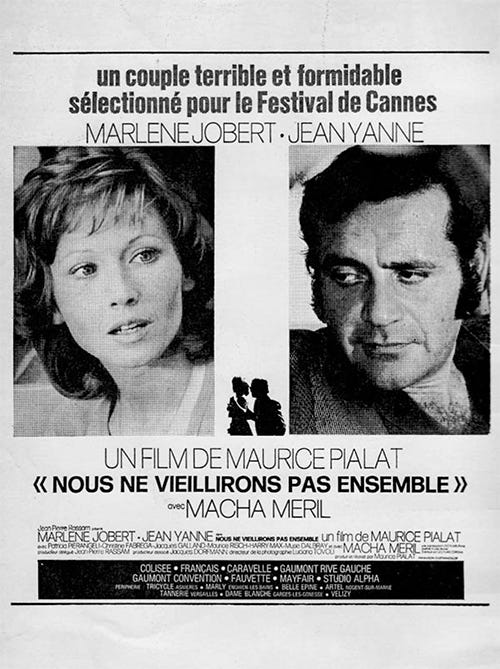
“I’m leaving.
“I want to pass through Illiers, Proust’s country, but my car broke down, and I sputtered back to Paris.”
It’s at the close of a chapter that Maurice Pialat sets down this passage. At the time, Nous ne vieillirons pas ensemble is not yet a film but a novel — a brief and beautiful narrative of indifference and dejection. From the book to the film, the story remains the same: the interminable end of a six-year relationship between a young temp-secretary and a weak-willed filmmaker fifteen years her senior. Colette becomes Catherine, Jean stays as Jean, which is to say Pialat himself — with the character’s profession, his dour disposition, and the use of the first-person being indicated even more clearly on paper than on film.
After a brief sojourn in the company of the young woman’s parents, Jean leaves once again. Pissed off, crestfallen — once again. He gets in his R8 — once again — and before heading back to Paris means to pass through Illiers, Proust’s country. The car breaks down: a trip for nothing, when all’s said and done. Jean is an obvious failure — he won’t even succeed at paying a visit to the great writer. We don’t know what he might have taken away from this pilgrimage, the intention of which, at least, testifies to an aesthete asleep beneath the brute. On the other hand, it’s hard for us at this point to resist comparing the two expressions, different enough that the one seems to be the inverse of the other: À la recherche du temps perdu, Nous ne vieillirons pas ensemble. [In search of lost time, We won’t grow old together.]
It’s thanks to Gilles Deleuze and to Proust et les signes [Proust and Signs, 1964/1976] that we’ve arrived at an understanding that, in reality, Proust’s title contains two meanings. Time lost, then regained, is the domain of memory, of which only writing can ensure reattainment. And it’s the time at which the writer, in his youth, will lose himself in distractions, and which he realizes in time was necessary to his future oeuvre, for without this he would have known none of those signs — worldly, amorous... — which make up the heart of things. Writing retrieves and remunerates them both — the lost time of the past in general, and the lost time of idleness in particular. Can we say as much about Pialat’s expression? Is it possible here to recognize the game of two significations and to deduce from them one definition of his aesthetic?
••••••
To pose these questions is already to begin responding to another question while signaling an affinity between writer and filmmaker. Neither one is in the process of making only an autobiographical work in the first-person — for each, art is an explicit concern, too. We know this of Proust, but we know it less of Pialat. We willfully overlook the fact that Nous ne vieillirons pas ensemble has a filmmaker as its lead character; that Jean Yanne is shown with a camera and Marlène Jobert is handling sound; that Demy, Chabrol, and Dreyer are a few of the names scattered throughout the dialogue; and that Jean is ironic about the critical spirit acquired by the young woman beside him, and with which she presently seems to contaminate her husband as they watch a film on TV. Without a doubt, this aspect is felt especially in the novel, in which a wider berth is given to Jean’s laments about his stunted career, side by side with the evocation of the Parisian cinematographic milieu. The Cinema nevertheless remains present in the cinema, as theme and as motif.
Here, in effect, is a film that can never be misunderstood as not being a film. It’s customary to bring attention to the repetitive nature, to the countless scenes in the car between Catherine and Jean, to the alternation between break-ups and reconciliations. But taking all of this into account, it’s uncertain that we’ve actually noted how much this structure borrows from the onscreen representation. Catherine and Jean come and go: a drama made entirely of ‘entrances’ and ‘exits’, in the scenographic and psychological sense. Seated side-by-side in the idling R8, they could just as well be in the process of rehearsing their next scene, which they’ll go act out at a location more appropriate to the emotions at play than this old car... The construction of each scene is admittedly minimal — she and he in the midst of discussion, more often than not — but Pialat has enough wherewithal to avoid shot/counter-shot and to find here and there some equivalent of a handrail or a trestle: a balcony, a fence, a guardrail, a parapet, a window... Beneath the guise of ascetism, the wealth of the théâtres de fortune rivals that of Pialat’s ‘old master’, Jean Renoir.
It’s obviously the type of received-wisdom one would like to kill off once and for all: the portrait and the eulogy of Pialat as a filmmaker of transparency and of realist immediacy, auteur of films whose power would result, miraculously, from being ‘like life’. Nothing more false, nor more pernicious. To reject these stupidities would be enough to bring about the unexpected act of a comparison with Proust. Like a writer, Pialat has art’s obsession — do we need to recall he was a painter before becoming a filmmaker? As such he recreates; he remakes.
Yet it’s quite true that everyone goes against their expressions. Past versus future, affirmation of the past versus negation of the future. Momentum versus impasse, momentum of rediscovery versus impasse of the break-up. The lost time of idleness in Proust responds to a distraction of another sort in Pialat: a certain way of grinding the present down to the point of blindness. It’s the first sense of the saying: the present is the negation of the future, repetition and erasure, fabrication of oblivion. Caresses and slaps come one after the other between Catherine and Jean: it would seem everyone’s always at the point of perishing, or of being reborn. The most beautiful words they exchange are to confide to one another with a sigh, a few moments after an argument one would have believed irreparable: “Things are just like they were before.” They get in the car and take the train; Jean shows up several times looking for Catherine at the station; he even has a discussion about the comparative merits of the automobile and the SNCF [the Société Nationale des Chemins de Fer Français — i.e., the French National Railway system —ed.] with her grandmother. Strange fate of lovers, to always be leaving for, or coming back from, some big trip. No refund. One-way, with no return ticket.
Nous ne vieillirons pas ensemble is a terrible expression of refusal and deliberate oblivion, by way of anticipation. The opposite of Proustian memory. But how far we are, as well, from a so-called faithfulness to life! The versatility of the humors in the lovers — here joyful, there sad; here romantic, there detesting one another — is no doubt real, but it only becomes realistic under cover of a mise en scène that regards each moment as repetition and as the abolition of what came before. The theatre of entrances and exits, of departures and arrivals, resets the gauges over and over again. Cancelation of the work of the hours and the days that is the good fortune and the curse between Catherine and Jean: the unconsciousness of its disaster, but also its impossibility of genuinely taking its position in the story. Pialat confesses as much in the first lines of the novel: he doesn’t know what it is to grow old, he doesn’t know how to see, how to feel time passing. He ignores what being alive means. Before adding, first lamentation in a long series: “But other people are alive!”
The admission matters. Catherine and Jean keep themselves in precarious balance on a windowledge, a rowboat... Always between two embankments or between two doors, immobile in the car at rest, awaiting who knows what sort of green light or signal to go onward. In the breakdown, they’re no longer alive. Whenever their love story seems to reach its end, after Catherine has told of her decision to leave, Jean and she in effect keep showing up — telling each other it’s over — giving parting gifts — evoking their common past and the future they won’t be sharing: scenes of tenderness, from out of nowhere.
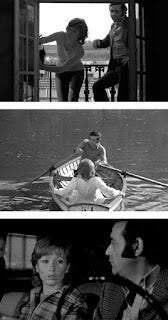
Who would be bold enough to say that the couple’s love doesn’t prove as strong — or that it is perhaps even stronger, now that things seem to be over — as when they kept saying things are just like they were ‘before’? Who would pretend that this love will have been something other than its incapacity, its oblivion and its absence? That its yes hadn’t, by the moment of the encounter, become a no? We say that Pialat is the filmmaker of the unfinished. Of the already-over, rather: that which, closed, could in spite of everything take off once again for another go-round. Nuance.
Unbelievable moments when, without bitterness, Jean confides in Catherine that she could marry a doctor, and she responds: “Yes, I’m going to be married.” Or when Françoise, Jean’s wife, flies to his aid and tries to find Catherine, who has gone missing — this mistress that she should detest with all her might. Pialat, filmmaker of life? Of course not: it’s other people who are alive! The possible, the solid thing lies elsewhere: Catherine’s marriage in the eyes of Jean; adultery in the eyes of Françoise... Life is always something else; it’s on the other side. We make comments, we groan, we dissent... But we aren’t alive. Or are so without knowing it, while forgetting it.
How far we are, once more, from the positivity of a cinema that, in the sound and the fury, would be its own irrefutable evidence. Pialat’s cinema is a hole: that we think of the gaping elisions that have made a legend out of him, or even of the filmmaker’s remarks, always quick to say something bad about his films, when he doesn’t prefer simply to stay quiet. This art does not tell of its genesis, the moment where it is at last discovered. It declares its worthlessness: inexistence and mediocrity.
••••••
And yet it announces itself — and does so ironically. It designs itself, as we’ve already said: thematization of the subject of cinema, theatrical effects, frames within the frame... All this to be sure, but one must take care to observe the scenes between Catherine and Jean in the car. The camera gazes at them through the windshield; the doubling is evident, but with it comes a kind of distancing. From Pialat’s point of view, from the spectator’s point of view, it’s they who reside on the other side.
The cinema reveals itself, the windshield acts as a mirror, but all this still goes hand in hand with a renunciation. It gets established with a heightened cruelty when, in the background, passers-by turn themselves toward Jean Yanne or Marlène Jobert, or when the reflection of a boom-mic falls across the R8’s window. Pialat could have eliminated these technical imperfections. If he hasn’t done so, we might think it’s due to coherence: to indicate how much the couple Jean/Catherine, Yanne/Jobert is the film, the entire film, and nothing but the film. In their bubble, alone. At once surveilled and out of reach.
Would both life and art therefore be objects of the same negation? It’s what the ending appears to say, those piercing images upon which Catherine, positioned in the sea up to her midriff, is seeming to struggle as much against the waves as against the orders being thrown her way from off-screen. Impossible to know what she’s saying, the meaning of her gestures, of her laughter or of her annoyance: music drowns everything out. If the film lets a doubt linger on the origin of these images produced in an amateur manner, the novel is clear: on holiday, it specifies, Jean goes to Pathé, reviews the rushes — probably those shot in Camargue — and makes himself a reel from what he shot of Colette/Catherine.
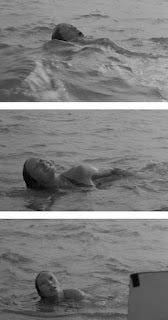
As Catherine addresses Jean holding the camera, Marlène Jobert addresses the cameraman, Luciano Tovoli, or maybe Pialat himself: dubbing and overlapping conveyed in full by the suppression of direct sound. These images are all that will remain for Jean of his love for Catherine: it’s hard to imagine a more insistent figure of abandonment infinitely dwelt upon than an ocean tossing and carrying a woman once loved. The distance between the camera and her is insurmountable: it’s the distance of love rejected from one’s love escaped; and it’s also the distance of the filmmaker from his own images.
The film concludes while making absolute the motif that will have haunted it: loss. Remembrance isn’t time regained, it’s time lost forever: farewell, not reconquered proximity. Just as ‘time regained’ has two meanings in Proust, ‘loss’ has two meanings in Pialat: in the present, and in the future (perfect). It’s the last word of the filmmaker as it was the first word of the writer: point of departure for the one, terminus for the other.
So why make films? That one wants to write in order to reappropriate one’s remembrances is effectively conceivable: the task is admirable, and the promise an enchantress. But that one becomes a filmmaker to record, indeed to confirm a loss — here there is an enigma.
As opposed to Proust, Pialat isn’t ‘one’ with his principal character, although he himself is his principal inspiration. The image assumes a distance not inherent to the word — resulting, perhaps, in the necessity of the passage from novel to film. Nous ne vieillirons pas ensemble thus actually signifies two things, the linking together of two types of separation. It signifies that the film recounts the failure of a love, or rather a love that wasn’t ever anything other than its failure, or its oblivion, or its absence, or its bereavement: first negation. And it also signifies that this story is recounted with the same means of loss: a camera indifferent and most often in a fixed position, framings that drift away as much as they call attention to something... The elementary means of an artform — the cinema — drifting away, mummifying at the same time it’s recording. An artform saying: What was mine yesterday is no longer so today. An artform which, as it shows two lovers who won’t grow old together, also repeats this truth to itself, for its own use.
There’s a double negative projection in Pialat’s expression, existential and aesthetic. It’s an expression that belongs to a character: I know I don’t know how to be alive and that one day, in spite of this, I’ll have to be fully conscious of the fact. And it’s the expression that a filmmaker addresses to his images. For Pialat, the place of the cinema can only be that of the no-place: separation from separation. If these films provide safe-haven to loss, it’s in order to find a way to circumscribe it, to hurl it back again as far as possible. To send it into the sea, to make it turn up on the other side across from this coast. Cinema of conjuration or of exorcism, as Serge Daney put it with regard to this same title, in his critical piece on À nos amours. [Here’s to Our Loves., Maurice Pialat, 1983].
We must therefore overturn the received-wisdom: for this artform, life is the other side, the diametric opposite. On one hand it paints lives of resentment and hate, empty lives, at war with themselves. And on the other hand, by welcoming negation it hopes to conjure it, to negate it. So that, elsewhere, a life at last becomes possible. Elsewhere? Ici, et non plus là-bas. •
Pialat Says...
by Maurice Pialat [1972]
Translated from the French by Craig Keller
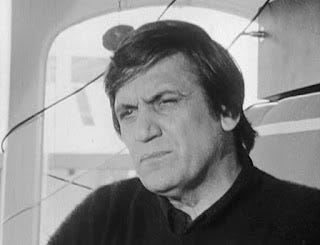
It’s the story of the break-up of a couple, a three-month break-up between a man of 35, 40 years of age, and the girl he’s been living with for six years, without really living with her, since he’s married and refuses to get a divorce — he’s incapable of leaving either one, wife or mistress.
I always thought, for this film, there had to be actors who had a real resemblance to the protagonists of the actual story...
For a very long time since Godard’s Weekend [1967], or even before, I had wanted to make a film with Jean Yanne. If the French cinema existed nowdays like it did before the war, Yanne could be what Gabin was at the time of Pépé le Moko [Julien Duvivier, 1937] or of Le quai des brûmes [The Port of Shadows, Marcel Carné, 1938]... the actor whom the French spectator can best identify with. Of course, I’m only speaking of Gabin or Yanne on-screen, not in real life. Anyway I don’t think Jean Yanne has the least desire to take on the character of ‘Mr. France’ of 1972.
Marlène Jobert too, I chose her for her resemblance to the real person... I wanted someone very ‘French’, very representative of that generation of girls who've been reading Elle. And in any case I’ve known her for a long time, since 1963.
I don’t like improvising. For me, it’s all about encountering what’s natural. [Improvising] makes everyone ham it up.
I totally reject cinéma vérité....
As for neorealism, it depends on what we’re talking about. If we’re referring to the first films of Rossellini, I agree; if we’re referring to what came after, then not at all, since for me it’s a retrograde cinema, which has to do with the fact that it’s silent, and I don’t support silent cinema... By silent, I mean post-synchronized. It seems difficult to me to speak about realism when you’re relying on post-synchronization. Realism isn’t just shooting in the streets — realism is direct sound.
I refuse to direct actors — in the classic sense of the term; I had gotten acquainted with the process while I was an actor in the theatre, and Michel Vitold’s assistant. On a film, I don’t ‘direct’ the actors, I don’t like answering the question “what should I do?” posed by an actor, and yet the day I was on the set as an actor with Chabrol [in Que la bête meure (Let the Beast Die, 1969)], I had of course wanted to pose the question myself at every instant. I resisted...
I don’t pretend to be escaping every convention, I know very well that you only escape or reject one convention to fall right into another... but I’m trying to escape — as far as what concerns the actors — a ‘theatrical’ convention, that archaic convention where the actor directed by the master’s hand is the instrument moving the text and the story along... What’s interesting to do with an actor, and what I’ve ended up doing without noticing at the beginning but have become more and more conscious of, is to make him forget the context, the story — I try at the moment I’m filming to preserve something of the life of people at the moment when they’re acting. I don’t make films about the actors’ concentration.
At the start of production, I wanted each scene to be shot in the exact places where the events had occurred — if it happened in three different places, I wanted to shoot in those three places, and then I understood that I needed to preserve the essential thing, not split it up or scatter the scenes around; I needed to sacrifice fidelity to a story written like it had been lived, so as not to lose what might happen — at the moment of shooting — across the shot in the way of emotion... and which I’d no longer be able to recapture.
In France, we live on the idea of the ‘cocu pauvre type’ [‘pathetic dupe/schmuck’], of Molière’s ridiculous dupe, and I wanted to tell things differently... François Chevassu in La Revue du cinéma defined the movies I’m trying to make as ‘a gaze-cinema’ creating and recording its own life.
If I had to define what I’ve wanted to do...
Realism isn’t what’s happening today or what’s happening yesterday. At the point of shooting, there’s no time, there’s no present, or past (in the historical sense) — there’s the moment we’re filming in. You have to get as close as possible to that truth of the moment, in my opinion always the same one, made of very simple feelings...
For me, this is the music of a film. It’s this music which, actually, has nothing to do with realism, with whatever’s said. These aren’t even emotions any longer, feelings, sensations of life, because it’s not true that the cinema reproduces them — it’s something that seems to be happening, but which really isn't. •
From "Three Encounters with Maurice Pialat"
Excerpt from an Interview by Stéphane Lévy-Klein and Olivier Eyquem [1973]
Translated from the French by Craig Keller
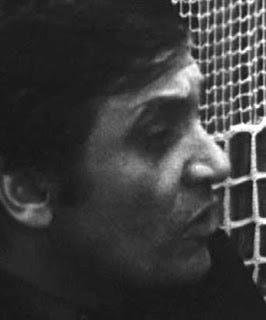
I speak of Rozier with affection and detachment because he belongs to a period I’m familiar with.... I made my first film in ’60 [Pialat is referring to L’amour existe (Love Exists) — his first ‘professional’ film. —ed.]; we’re in ’73: this makes thirteen years over which I’ve reflected — I’m not saying profoundly, but constantly. My evolution is that collapse. At one moment you might recover, you might become one of them and make the same shit as they do. I went through this around Nous ne vieillirons pas ensemble.
It’s obvious that we can’t just leave things be without fighting. If you say: “There’s still a virgin corner on the map, I’m gonna plant my flag over there,” I think you’ve made a mistake. You absolutely have to fight wherever it’s possible, even if that fight leads to failure. You have to fight with the same weapons as everyone else, keep making a crack in that wall knowing that this demands on your part a gigantic, practically vainglorious, effort.
What do you mean by, “I’m on the Right.”?
I have a stance on the Right with regard to my profession, in opposition to those who work there, and who are for the most part union members who belong to the Left. In no instance do I support social injustice. When I make a film, I need order, whereas my entire life is chaos.
Folks in this line can’t ignore the fact that they’re being manipulated by money-men. They serve them in opposition to the director, and therefore place themselves at the service of the ruling class. That’s why I assimilate them to this end.
Supposing, today, I wanted to shoot at midnight or at two or three in the morning, I can do it, but at such a price that I’d quickly go over my budget. If I wanted to shoot according to my tastes and my aspirations, the costs would prevent the realisation. On the other hand, to make my most recent film, I was required to act as my own producer and, in the eyes of the crew, I’m a son-of-a-bitch. For example, when I shoot, I start early in the morning, and it’s customary in the movie business not to start at that time. However, when you show up late, it really cuts into things. Taking into account what these men have chosen to do and the benefits they’re receiving in doing so, they’re unable to tally up their hours like factory-workers — as their jobs require. Year in and year out those constraints only get worse.
Every day I notice that the people in this profession are all impostors. These are people who say: “We’re making a film with you,” so, in fact, they’re ‘putting in hours’, and, if possible, overtime. They’re duplicitous, presenting doctored contracts to the distributors. The production director goes on dedicating the essential work hours to preparing contracts and phony estimates for the CNC. They have lunch, they get on the telephone, they put stuff off, they fudge things. I have the normal need of someone who, naïvely, thinks he’s able to express himself this way, and I refuse the situation.
What can be done? Accept or refuse?
For me, there’s no question of accepting — I’ve said it before: you have to fight. Despite the fact that at this very moment, I’m seriously wondering if I’m not going to end up as a writer. There are the first signs, in any case: the scenario for Nous ne vieillirons pas ensemble is much better than the film. In the week in which it was released, I wondered for an entire day: “What good is there in carrying on with this?”
A book doesn’t allow you to live; a film does.
More than this film.
Does it bother you to talk about this?
No, I made this film for [a salary of] 7500 francs which really meant nothing, since in any case I was in debt for 300,000. •
Maurice Pialat in Conversation, 1973
Translated from the French by Craig Keller
One day I turned 45. But I felt 25.
So what did you do?
I made Nous ne vieillirons pas ensemble.
For that reason alone?
No, for a bunch of other ones too.
For the same reasons that led you to make L’amour existe and L’enfance-nue [Naked-Childhood, 1968]?
Probably. You’re on to something. Both of those titles are cowards.
You mean traitors?
Yes, they betrayed me. They expose fifteen years of silence... Maybe fifteen years of childhood... •
Opening paragraph of Pialat’s novel, Nous ne vieillirons pas ensemble:
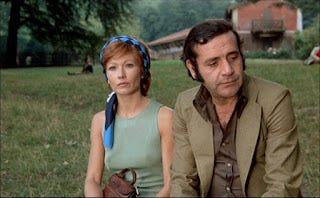
Je n’ai jamais bien su où j’allais dans la vie et je n’ai surtout pas la notion du temps qui passe. Je suis encore comme ça aujourd’hui, et si je remonte à quelques années, je me retrouve semblable, et plus loin encore, semblable... Est-ce une façon de ne pas vieillir? Le temps a peu de prise sur celui qui ne le sent pas passer...
•••
I never really knew where I was going in life and I especially had no sense of time passing. I’m still that way today, and if I go back a few years, I realize I was the same way then, and further back still, the same... Is this a way of not growing old? Time has little hold on someone who doesn’t feel it pass... •